
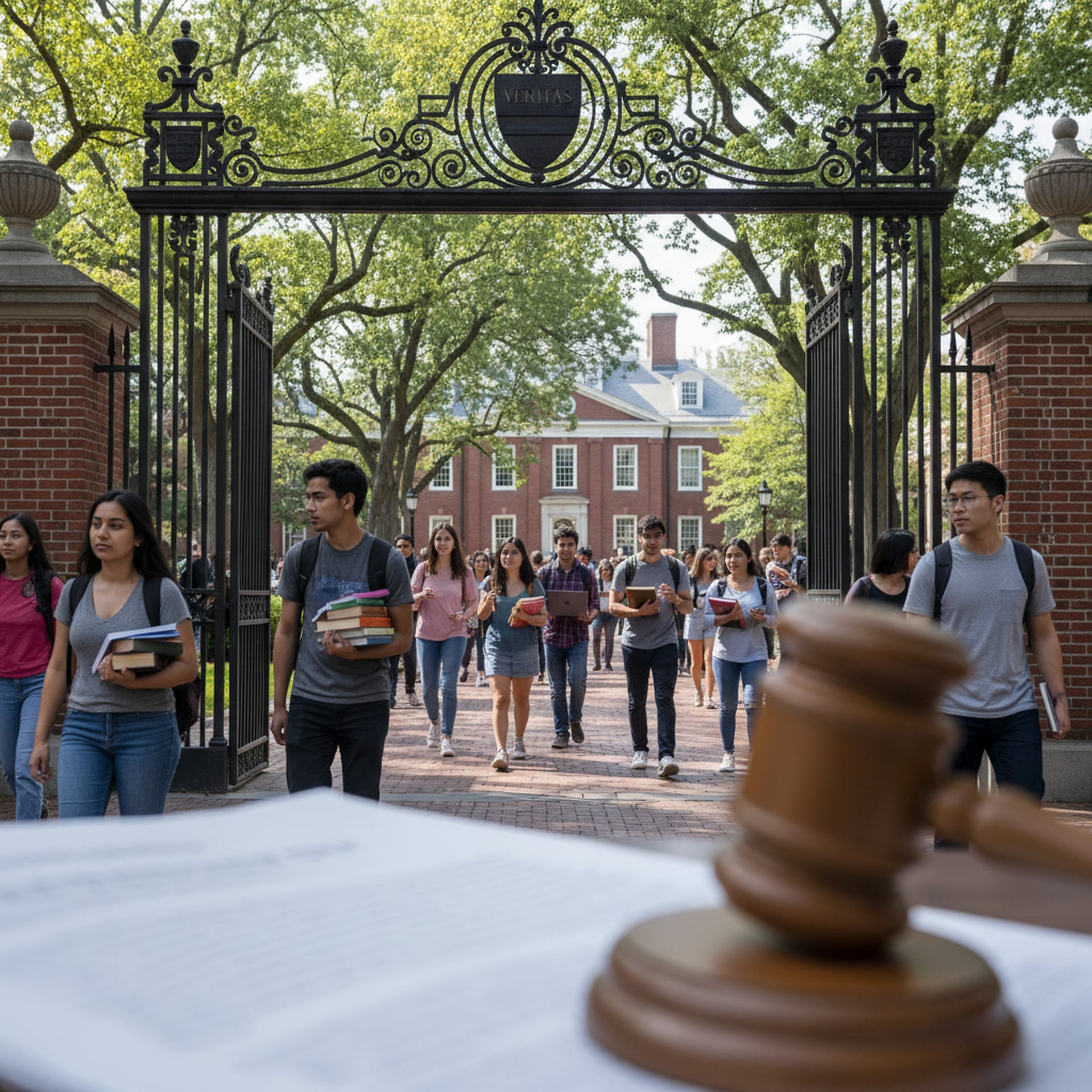
In a move poised to send ripples through the global higher education landscape, the Trump administration has formally initiated legal proceedings against Harvard University, accusing the prestigious Ivy League institution of failing to adequately address pervasive antisemitism on its campus. This significant legal challenge emerges after an extensive, months-long federal investigation into the university's practices and a subsequent breakdown in negotiations aimed at reaching an amicable settlement. The lawsuit marks a critical escalation in the ongoing national and international discourse surrounding campus climate, free speech, and the responsibility of educational institutions to protect students from discrimination.
The decision to pursue litigation against a university of Harvard's stature underscores the administration's resolve to enforce federal anti-discrimination statutes. For months, federal investigators had meticulously examined complaints and gathered evidence pertaining to allegations of a hostile environment for Jewish students. Such investigations are typically triggered by a confluence of factors, including formal complaints filed by students or advocacy groups, public outcry following specific incidents, or broader concerns about institutional responses to discrimination. The federal government's involvement often stems from its authority under Title VI of the Civil Rights Act of 1964, which prohibits discrimination on the basis of race, color, or national origin in programs and activities receiving federal financial assistance. While antisemitism is not explicitly listed, interpretations have broadened to include discrimination against Jewish individuals when it is rooted in their ethnic or ancestral identity, thereby falling under the purview of national origin discrimination.
The administration's investigative efforts likely involved reviewing university policies, interviewing students, faculty, and administrators, and scrutinizing records of reported incidents and the university's responses. The depth and duration of this inquiry suggest a substantial body of evidence was compiled, leading the government to conclude that Harvard's actions, or inactions, constituted a violation of its obligations to provide a non-discriminatory educational environment. This rigorous process is a standard precursor to such high-stakes legal actions, indicating that the government believes it has a strong case to present in court.
Prior to filing the lawsuit, both parties engaged in what were described as protracted settlement talks. The failure of these negotiations to yield a resolution is particularly telling. Settlements are often preferred by both government agencies and educational institutions as they offer a path to avoid the significant financial costs, reputational damage, and prolonged uncertainty associated with litigation. For Harvard, a settlement could have allowed the university to implement corrective measures without a public trial, thereby maintaining greater control over the narrative and the remedies. For the administration, a settlement could have achieved its objectives of ensuring a safer campus environment without expending extensive judicial resources. The breakdown in these discussions suggests a fundamental disagreement on either the extent of the problem, the proposed solutions, or Harvard's unwillingness to concede to the government's demands, pushing the matter into the adversarial arena of the federal courts.
The core allegations against Harvard likely center on claims that the university permitted or fostered an environment where antisemitic incidents were not adequately addressed, leading to a hostile educational experience for Jewish students. This could encompass a range of issues, from verbal harassment and intimidation to the perceived inaction of university officials in condemning or responding to specific acts. The legal challenge will inevitably delve into the complex and often contentious debate surrounding the distinction between legitimate criticism of political entities, such as the Israeli government, and expressions of antisemitism that target Jewish individuals based on their identity. This distinction is a global flashpoint, and how the court navigates it could have far-reaching implications for academic discourse.
Harvard's defense is expected to vigorously assert its commitment to diversity, inclusion, and the robust protection of free speech and academic freedom on its campus. The university will likely highlight its existing anti-discrimination policies, its mechanisms for reporting and addressing grievances, and its efforts to foster an inclusive environment for students of all backgrounds. The institution may argue that certain expressions, while perhaps offensive to some, fall under the umbrella of protected speech, and that the administration's demands infringe upon the fundamental principles of open inquiry and intellectual debate that are cornerstones of higher education. The legal battle will thus become a crucible for testing the boundaries of these competing principles in a university setting.
The ramifications of this lawsuit extend far beyond the confines of Harvard Yard, resonating across the global landscape of higher education. As one of the world's most influential universities, Harvard's policies and legal battles often set precedents or spark discussions that are closely watched and emulated by institutions worldwide. Should the government prevail, it could embolden regulatory bodies in other nations to scrutinize their own universities more closely regarding issues of religious or ethnic discrimination. Conversely, if Harvard successfully defends its position, it could reinforce the arguments for broad academic freedom, even in the face of governmental pressure.
Universities globally are grappling with the delicate balance between fostering environments of open intellectual exchange and ensuring that all students feel safe and respected, free from harassment and discrimination. This case will undoubtedly intensify global debates on how to define and combat antisemitism effectively within academic contexts, particularly in an era of heightened geopolitical tensions and diverse student populations. Educational institutions from Europe to Asia, many of which look to American universities as models, will be observing the legal proceedings closely, potentially reviewing their own internal policies on campus climate, free speech, and the handling of discrimination complaints. The outcome could influence how international students perceive the safety and inclusivity of studying abroad, particularly in the United States.
Furthermore, the lawsuit highlights the increasing role of governmental oversight in university affairs, a trend that is not unique to the United States. Across various jurisdictions, governments are increasingly asserting their authority to ensure that educational institutions adhere to national standards of equality and non-discrimination. This case could serve as a powerful reminder to universities worldwide that their autonomy is not absolute and that accountability to national laws and societal expectations remains paramount, especially when receiving public funding or holding significant public trust.
In conclusion, the Trump administration's lawsuit against Harvard University over allegations of antisemitism represents a pivotal moment for global higher education. It is a legal confrontation that pits governmental authority against institutional autonomy, and the imperative to combat discrimination against the principles of free speech. The ensuing legal battle is expected to be lengthy and complex, with profound implications for how universities worldwide navigate the intricate challenges of fostering inclusive environments, protecting academic freedom, and responding to allegations of prejudice. The global academic community will be watching intently as this case unfolds, seeking guidance on how to uphold both the sanctity of open inquiry and the fundamental right of every student to an education free from harassment and discrimination.
Support Nivaran Foundation's independent global reporting on critical education and human rights issues by donating today.
Talk to Nivaran Global