
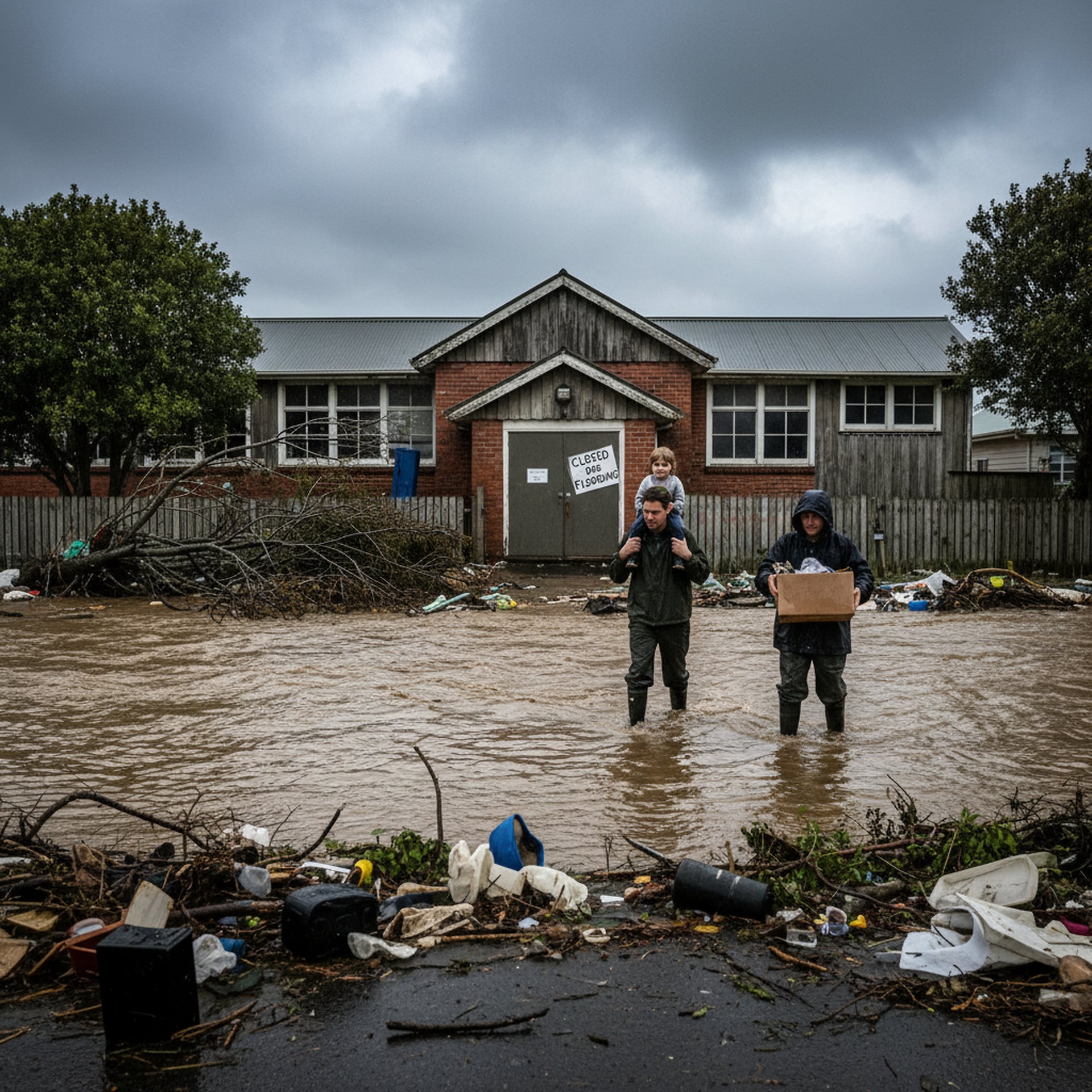
WELLINGTON, New Zealand – New Zealand’s capital, Wellington, has been plunged into a state of emergency following an onslaught of torrential rain that unleashed widespread flash floods and devastating landslides across the city and its surrounding areas. The deluge, which began on April 21, 2026, forced the immediate closure of more than 100 schools and educational institutions, disrupting the learning of thousands of students and highlighting the profound and far-reaching implications of extreme weather events on critical public services globally.
The declaration of emergency in Wellington is a stark reminder of the increasing vulnerability of urban centers worldwide to climate-induced disasters. The sheer volume of rainfall overwhelmed drainage systems, turning streets into rivers and triggering multiple landslides that blocked roads and threatened infrastructure. For the education sector, the immediate impact was severe. Schools, often serving as community hubs and safe havens, were rendered inaccessible or unsafe. Parents faced immediate challenges in childcare and ensuring their children’s safety, while educators scrambled to adapt to an unforeseen halt in regular instruction. This scenario is not unique to Wellington; communities from coastal cities in Asia to island nations in the Pacific regularly face similar disruptions, underscoring a universal challenge in maintaining educational continuity amidst environmental crises.
The closure of over a hundred schools in Wellington represents more than just a temporary pause in academic calendars. It signifies a significant disruption to the structured learning environment crucial for child development and academic progress. For students, particularly those preparing for examinations or relying on school for essential services like meals and psychosocial support, these closures can have lasting consequences. The sudden shift away from in-person learning, even if short-lived, can exacerbate existing educational inequalities, especially for students without reliable access to digital resources or a conducive home learning environment. Globally, many regions prone to extreme weather events struggle with the digital divide, making remote learning an unviable option for a substantial portion of their student populations. The Wellington incident, while occurring in a developed nation, mirrors the challenges faced by countless communities in less resourced areas, where such disruptions can lead to prolonged educational setbacks and even increased dropout rates.
Beyond the immediate educational fallout, the health implications of such widespread flooding are equally concerning. Flash floods and landslides pose direct threats to life and limb, leading to injuries and, tragically, sometimes fatalities. The aftermath brings a heightened risk of waterborne diseases as contaminated floodwaters mix with sewage systems and compromise drinking water supplies. Public health officials in Wellington, like their counterparts in disaster-prone regions worldwide, must swiftly address the potential for outbreaks of illnesses such as giardiasis, cholera, and leptospirosis. The disruption to healthcare access is another critical concern; damaged roads and overwhelmed emergency services can hinder patients from reaching hospitals and clinics, while healthcare facilities themselves may suffer damage or lose power, compromising their ability to deliver essential care. This places immense strain on already stretched public health systems, a challenge amplified in regions with fewer resources.
The mental health toll on affected populations cannot be overstated. Experiencing a natural disaster, witnessing property damage, or facing displacement can induce significant stress, anxiety, and trauma. Children and vulnerable adults are particularly susceptible to these psychological impacts, which can manifest as long-term mental health issues if not adequately addressed. The Nivaran Foundation recognizes that building resilient communities involves not only physical infrastructure but also robust mental health support systems that can be rapidly deployed in post-disaster scenarios. The Wellington emergency serves as a poignant reminder that comprehensive disaster preparedness must integrate mental health services into its core strategy, a lesson applicable to urban and rural settings across the globe.
The increasing frequency and intensity of extreme weather events, directly linked to global climate change, demand a paradigm shift in how societies approach disaster preparedness and resilience building. What happened in Wellington is not an isolated incident but part of a broader global pattern. From devastating floods in Pakistan and Germany to unprecedented heatwaves in Europe and North America, and powerful cyclones in Southeast Asia, communities worldwide are grappling with the escalating impacts of a changing climate. These events disproportionately affect vulnerable populations, exacerbating existing health disparities and educational inequalities.
For the education sector, this necessitates a proactive approach to disaster-resilient infrastructure, ensuring school buildings can withstand extreme weather and serve as safe shelters when needed. It also calls for the integration of climate change education into curricula, empowering students with knowledge about environmental stewardship and disaster preparedness. Furthermore, developing robust contingency plans for educational continuity, including accessible remote learning platforms and psychosocial support for students and staff, is paramount. The global community must invest in these measures to safeguard the future of education against the growing threat of climate-induced disruptions.
Similarly, public health systems require significant investment in climate-resilient infrastructure, early warning systems for extreme weather, and comprehensive public health campaigns focused on disaster preparedness and response. This includes ensuring access to clean water and sanitation, strengthening disease surveillance, and enhancing the capacity of emergency medical services. International collaboration and knowledge sharing are crucial in this endeavor, allowing nations to learn from each other's experiences and implement best practices in building health systems that can withstand the shocks of a changing climate. The Nivaran Foundation actively supports initiatives aimed at strengthening these foundational pillars in communities most at risk.
The events in Wellington underscore a critical global imperative: the need for integrated strategies that protect and strengthen public health and education systems in the face of escalating climate challenges. As communities worldwide continue to experience the profound impacts of extreme weather, the lessons learned from incidents like the Wellington floods must drive urgent action. Investing in resilient infrastructure, comprehensive preparedness, and adaptive strategies is not merely a matter of recovery but a fundamental commitment to safeguarding human well-being and ensuring a sustainable future for all. The global community must unite to address these interconnected challenges, ensuring that every child has the opportunity to learn and every individual has access to essential health services, regardless of the climatic challenges they face.
Support Nivaran Foundation's efforts to build resilient health and education systems in communities vulnerable to global climate challenges.
Talk to Nivaran Global