
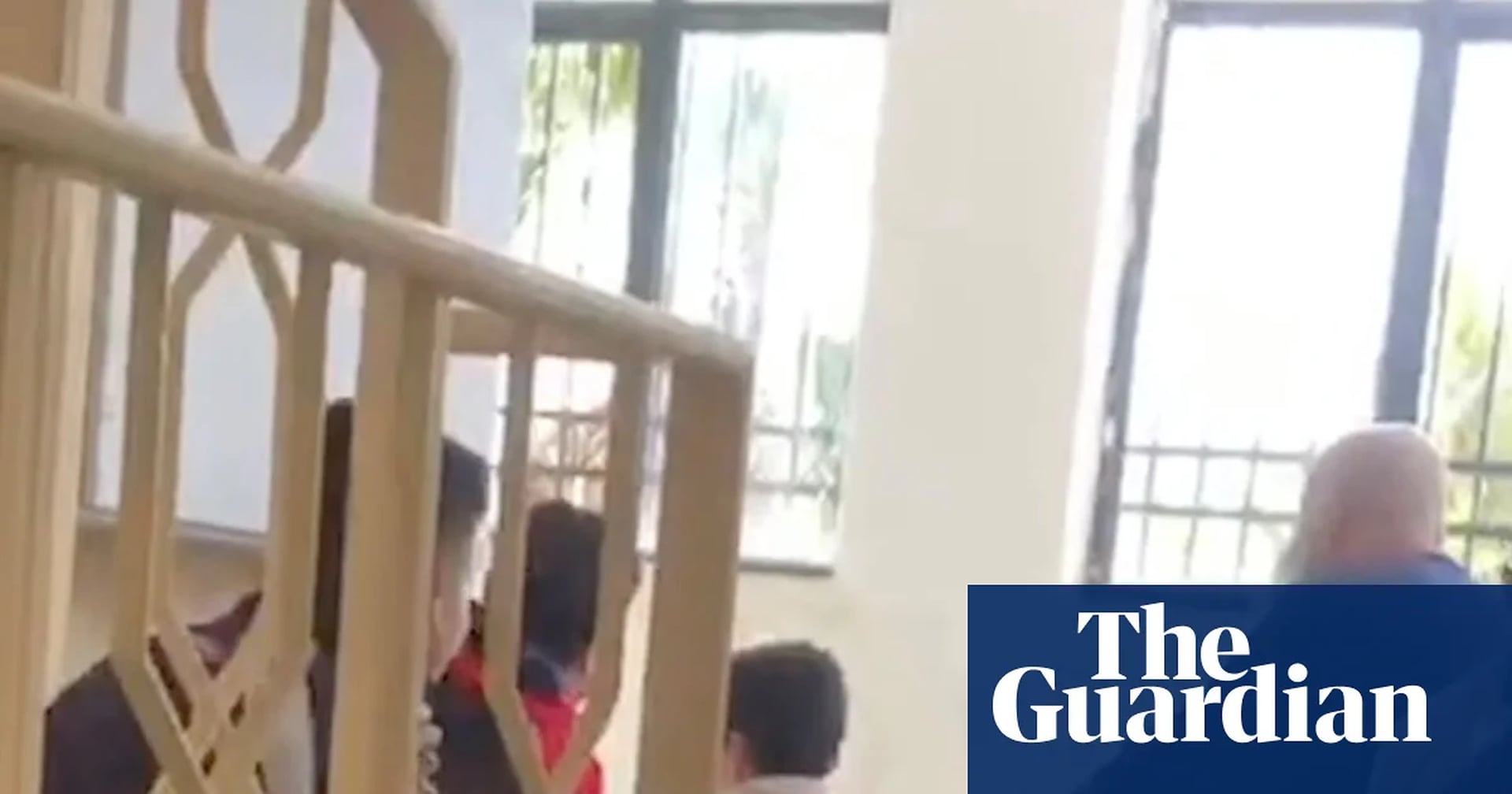
The tranquil routine of a school day in the West Bank was shattered recently by an act of violence that claimed the life of 14-year-old Aws al-Naasan. Studying in ninth grade at the Mughayyir boys’ secondary school, Aws was reportedly shot in the head just outside the western gate, an incident that sent shockwaves through his community and beyond. Eyewitness accounts describe a scene of terror and chaos as more shots echoed, and his friends desperately attempted to move his lifeless body to safety, leaving a stark trail of blood along the school wall. This tragic event is not merely an isolated incident but a stark illustration of an escalating crisis threatening the very foundation of education in the Palestinian territories, highlighting the dire consequences when conflict encroaches upon the sanctity of learning spaces.
The killing of young Aws underscores a deeply troubling and increasingly prevalent pattern of violence that has systematically targeted educational institutions and students across the West Bank. Schools, traditionally sanctuaries of learning and development, are becoming sites of profound vulnerability, exposing children to immense physical and psychological dangers. This systematic disruption of education extends far beyond direct assaults; it encompasses frequent incursions, arbitrary movement restrictions, and the pervasive climate of fear that permeates daily life. For thousands of Palestinian children, the journey to school is fraught with uncertainty, and the classroom itself offers little guarantee of safety, fundamentally undermining their right to learn in a secure and nurturing environment. The cumulative effect of such pressures creates an atmosphere where the pursuit of knowledge is perpetually overshadowed by the specter of violence.
The psychological toll on students living under such conditions is immeasurable. Witnessing violence, experiencing constant fear, and grappling with the loss of peers like Aws can lead to severe trauma, anxiety, and post-traumatic stress disorder. Children often struggle with concentration, exhibit behavioral changes, and face significant hurdles in their academic performance. The cumulative stress of living in a conflict-affected region deprives them of a normal childhood, replacing innocence with a pervasive sense of insecurity. This generation of students is not only losing out on critical learning opportunities but is also carrying the heavy burden of emotional scars that can impact their well-being and development for years to come, hindering their ability to thrive and contribute positively to their communities.
For students and educators alike, navigating this environment means a constant negotiation with fear. Every school bell, every distant sound, can trigger anxiety. Teachers often find themselves not just imparting knowledge but also acting as counselors, protectors, and sources of stability in an unstable world. Despite these overwhelming challenges, there is an enduring spirit of resilience. Students continue to attend classes, driven by a profound desire for a better future, and teachers remain committed to their profession, understanding the critical role education plays in their communities. However, this resilience comes at a significant cost, demanding an emotional and psychological toll that few outside such conflict zones can truly comprehend, making the need for external protection and support even more critical.
Beyond the immediate threat to life and limb, the escalating violence severely disrupts the educational process itself. Schools are forced to close frequently due to security concerns, leading to missed instructional days and an uneven curriculum. Student attendance plummets as parents, fearing for their children's safety, keep them home. Teachers, too, operate under immense pressure, often risking their own safety to reach schools and provide what education they can. The physical infrastructure of schools is also vulnerable, with reports of damage, destruction, or occupation further impeding the delivery of education. This creates a cycle of disadvantage, where access to quality education, a cornerstone of societal progress, becomes a luxury rather than a fundamental right, perpetuating cycles of poverty and instability.
The targeting of schools and students constitutes a grave violation of international humanitarian law and fundamental human rights principles. International conventions, such as the Fourth Geneva Convention and the Convention on the Rights of the Child, explicitly protect educational institutions and civilians, particularly children, during times of armed conflict. The right to education is universally recognized, emphasizing that every child, regardless of their circumstances, deserves access to safe, continuous, and quality learning environments. When these protections are disregarded, it not only undermines the fabric of local communities but also challenges the very principles of human dignity, justice, and the rule of law that the international community strives to uphold. Such acts demand immediate global condemnation and robust action to ensure accountability and prevent further atrocities against educational spaces.
From a global perspective, the crisis unfolding in West Bank schools serves as a stark and urgent reminder of how conflict can systematically dismantle educational systems, with devastating long-term consequences that extend far beyond regional borders. Nivaran Foundation, dedicated to advancing global health and education, recognizes that such attacks are not isolated regional issues but rather critical indicators of a broader failure to protect vulnerable populations and uphold universal rights. The erosion of education in any part of the world has profound ripple effects, potentially fueling instability, hindering sustainable development, and creating generations deprived of the essential tools to build peaceful and prosperous futures. Ensuring access to safe, uninterrupted education is not merely a humanitarian gesture; it is a strategic investment in global stability, human potential, and the collective future of humanity.
The continuous disruption of education also has profound socio-economic repercussions. A generation of children whose schooling is repeatedly interrupted or prematurely ended faces significantly diminished prospects for economic advancement and social mobility. This can lead to increased unemployment, reduced human capital, and a perpetuation of poverty within affected communities. Education is a powerful catalyst for change, empowering individuals with critical thinking skills, fostering innovation, and promoting civic engagement. When this catalyst is suppressed by violence, the entire societal structure weakens, making it harder for communities to recover, rebuild, and achieve sustainable development. The long-term cost of neglecting education in conflict zones far outweighs any short-term perceived gains.
Addressing this escalating crisis requires concerted and immediate action from the international community. There is an urgent need to ensure the physical protection of students, teachers, and educational facilities, allowing learning to continue unimpeded and safely. This includes advocating for an end to all forms of violence against schools, monitoring and reporting violations, and providing robust humanitarian support to affected educational systems. Furthermore, psychosocial support programs are critical to help children and educators cope with trauma and build resilience. The future of an entire generation depends on the global commitment to safeguard their right to education, transforming schools back into havens of hope and opportunity, even amidst adversity.
Support Nivaran Foundation's efforts to protect the right to education and ensure safety for children in vulnerable regions worldwide.
Talk to Nivaran Global