
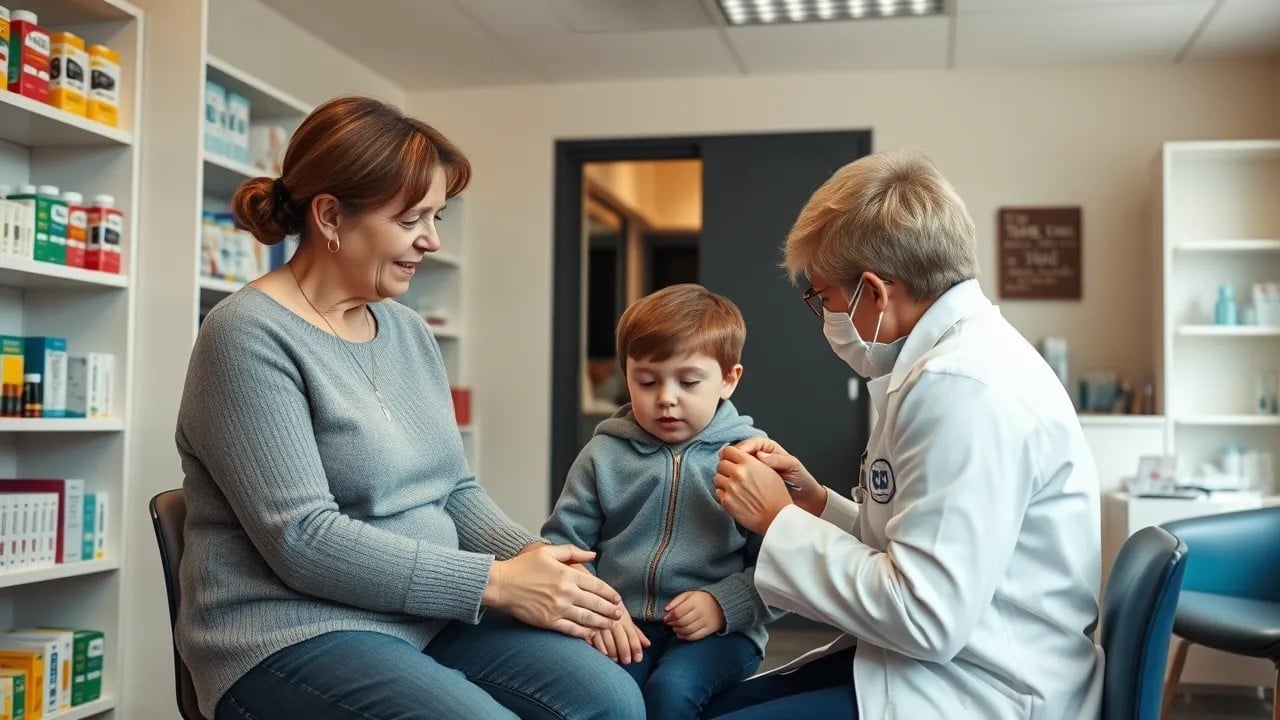
Parents urged to vaccinate children for flu as hospital cases surge in England
As flu hospitalisations rise in England ahead of winter holidays, health officials are urging parents to ensure their children are vaccinated before Christmas. The appeal is both an immediate effort to reduce children’s risk of serious illness and a test of whether vaccination can reach families quickly enough when seasonal pressure on health services is growing.
The NHS is widening its delivery approach by asking pharmacies to administer childhood flu vaccinations for the first time, according to The Guardian Global Health. The shift could make vaccination easier to access for some families, but an invitation is not the same as protection: uptake depends on whether parents receive clear information, can find a convenient appointment and have enough time to act.
Key Developments and Verified Findings
The reported vaccination push is focused on getting children protected before Christmas, as hospital admissions associated with flu rise. The available information does not specify the number of admissions, the pace of the increase or the proportion involving children. Those limits matter: the urgency of the appeal is clear, but the scale and distribution of illness cannot be quantified from the report’s summary alone.
The NHS in England is asking pharmacies to administer flu jabs to children for the first time. This expands the settings through which families may be able to obtain vaccination beyond established routes. Pharmacies can be familiar and locally accessible, but the change will help only if participating services have the capacity, staffing and practical arrangements to deliver vaccinations safely and consistently. The announcement, as reported, does not detail how many pharmacies will take part or which children will be eligible through them.
The immediate public message is preventive: parents are being asked to act before Christmas rather than wait for illness to spread through households or communities. Vaccination cannot guarantee that a child will avoid flu, and the report does not provide information about vaccine effectiveness or expected coverage. Its public-health rationale is nonetheless straightforward: prevention aims to reduce the chance of serious disease and ease pressure on care services at a time when hospitalisations are already rising.
Structural Public Health and Education Context
Childhood vaccination is shaped by access as much as by parental intention. A family may support immunisation yet face barriers such as limited appointment availability, work schedules, transport or difficulty finding reliable information. Adding pharmacies could reduce some of these obstacles, particularly where a local service offers a convenient alternative. But expanding delivery points does not automatically remove barriers for families who are least able to navigate a new system.
Trust and communication are also essential. Seasonal campaigns must explain who should be vaccinated, where to go and how to arrange an appointment, using language and channels that families can understand. Parents need information that is accurate without being alarming, and clear about what vaccination can and cannot do. If details about eligibility or access differ between providers, confusion may delay decisions and weaken the impact of the campaign.
Schools and early-years settings are relevant to prevention because children’s health affects learning, attendance and family routines. Flu-related illness can interrupt education and increase pressure on caregivers, while a strong vaccination programme can support broader efforts to protect children’s wellbeing. Yet schools should not be treated as substitutes for accessible health services. Effective prevention depends on coordination between healthcare providers, families and education settings, with safeguards for privacy and clear routes to care.
The pharmacy initiative should therefore be judged not only by whether new appointments are offered, but by whether families can use them in practice. Useful evaluation would examine availability, uptake and whether access improves across different communities, without assuming those results in advance. Transparent information about delivery and eligibility can help parents make timely decisions and allow services to identify gaps.
Rising admissions make the pre-Christmas appeal time-sensitive, but the response must extend beyond a short campaign. Reliable access, understandable guidance and coordination across local services are the foundations of equitable vaccination. Asking pharmacies to join the effort may broaden the route to protection; ensuring that every eligible family can take that route is the harder public-health task.
Implications for Frontline and Underserved Communities
A seasonal rise in flu admissions can place particular pressure on families who already face barriers to timely care. Distance from a vaccination site, limited transport, inflexible work schedules and caring responsibilities may make a routine appointment difficult to arrange. These obstacles can be more pronounced in rural areas, remote communities and neighbourhoods where primary-care services are stretched. Asking pharmacies to vaccinate children could bring services closer to where families live and shop, but access will depend on which locations participate, their opening hours and whether families can readily find reliable information about eligibility and appointments.
Convenience alone cannot resolve gaps in provision. Pharmacies and clinics need enough trained staff, appropriate space and clear arrangements for safeguarding, consent, record-keeping and follow-up. Families should be able to understand which children are eligible, whether vaccination is available without charge through the relevant NHS route, and what to do if a child has a health condition or a previous reaction that requires clinical advice. Schools also have a role: clear, accessible information can help parents make informed decisions, while careful planning can prevent vaccination messages from adding to the workload of teachers and school administrators. Communication should be available in formats and languages that reflect the communities being served, without making families responsible for navigating a fragmented system.
Community resilience grows when prevention is dependable, familiar and supported by trusted local relationships. Pharmacists, school nurses, primary-care teams and community organisations can help families distinguish evidence-based guidance from rumours, and explain that vaccination is one part of protecting children and reducing the risk of severe illness. Outreach must be respectful of different experiences and concerns, not limited to broad messages sent through channels that some households rarely use. At the same time, families need a clear route to ask questions privately and receive an answer from a qualified professional. When local services listen and respond, vaccination efforts can build confidence and help protect people at greater risk, including infants, older relatives and those with underlying health conditions.
Policy Priorities and the Road Ahead
The immediate priority is to make vaccination easy to obtain before the holiday period, while ensuring that speed does not come at the expense of safety or informed choice. NHS planners should provide participating pharmacies with practical guidance, training and appropriate clinical support, alongside a straightforward way to document each dose and share relevant information with a child’s usual care team. Public information should state who can be vaccinated, where services are available and how families can arrange an appointment. It should also explain what to do when a child is unwell or needs individual clinical advice. Consistent information across pharmacies, clinics and schools can reduce confusion and avoid unnecessary journeys.
Access should be measured by more than the number of doses administered. Health services should examine whether vaccination opportunities are reaching eligible children across different locations and communities, and identify where appointment availability, transport, language or digital access remain obstacles. Monitoring should use appropriate privacy safeguards and should not stigmatise families or areas with lower uptake. Where gaps emerge, local teams can adapt opening hours, offer additional appointment routes or work with trusted community partners to share accurate information. Clear accountability matters: service leads should know who is responsible for addressing access problems and how concerns raised by families will be resolved.
Beyond this flu season, the wider lesson is that childhood prevention depends on reliable, joined-up services. NHS leaders and local partners should review how pharmacy-based vaccination worked, including its effect on capacity, the experience of families and any barriers to participation. Findings can inform future planning, workforce development and communication, rather than treating an emergency push as a substitute for sustained primary care. Schools should receive timely, practical guidance without being expected to take on clinical responsibilities they are not resourced to perform. A coordinated approach—grounded in evidence, transparent about limitations and responsive to local needs—can strengthen protection for children while helping health systems prepare for future seasonal pressures.
Editorial Credit & Source Attribution
This article was independently researched, analyzed, and rewritten by the Nivaran Global Editorial Team to provide public-health and educational context. Primary reporting credit: The Guardian Global Health (published 2026-11-27). Cover visual: Unique AI editorial illustration created exclusively for Nivaran.
Help turn accountable public-health reporting into frontline clinical action—give monthly, make a one-time USD gift, or sponsor a rural mobile health camp.