
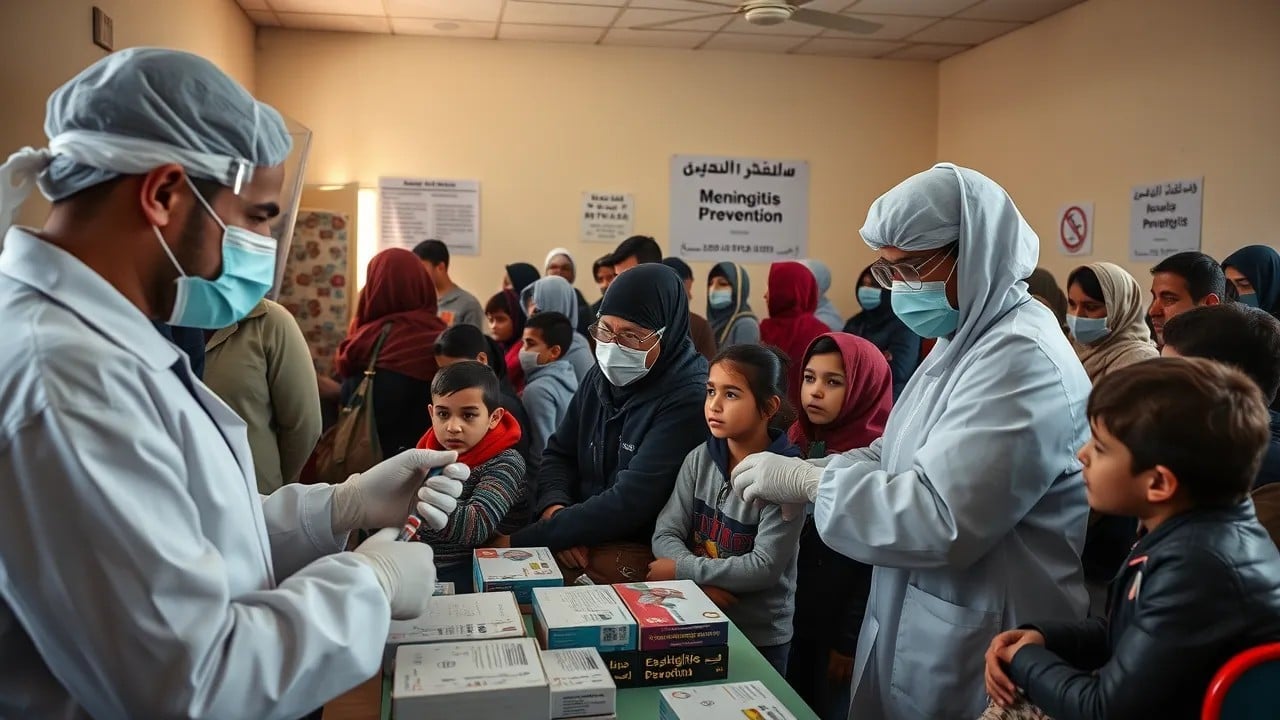
Gaza issues meningitis epidemic alert after steep rise in cases
Published by The Guardian Global Health (2026‑11‑24)
The Gaza Strip’s health ministry has declared a meningitis epidemic after a sudden surge in infections, reporting 272 new cases in October alone—more than eight times the usual monthly figure. The announcement, made by senior official Dr Nidal Ghoneim, signals a growing public‑health crisis that threatens to overwhelm already strained medical facilities and jeopardise the health of children and pregnant women in the region.
The rapid escalation of meningitis cases comes at a time when Gaza’s healthcare system is grappling with chronic shortages of supplies, personnel, and infrastructure. Hospitals are operating at near‑full capacity, and the influx of patients has strained emergency departments, intensive care units, and vaccination campaigns. The Ministry’s alert underscores the urgent need for coordinated international support, robust disease‑control measures, and sustained investment in public‑health education to curb the spread of this potentially fatal disease.
Key Developments and Verified Findings
The Ministry’s latest data reveal that 272 new meningitis cases were confirmed in October, a figure that dwarfs the average of 34 cases typically recorded each month. This spike represents an eightfold increase and has prompted the declaration of an epidemic, the highest level of alert in the region’s disease‑surveillance hierarchy. The cases are predominantly reported in densely populated urban centres, where overcrowding and limited access to clean water and sanitation amplify transmission risks.
Dr Nidal Ghoneim, who heads the Ministry’s infectious‑disease unit, confirmed that the majority of new infections involve Neisseria meningitidis serogroup W, a strain that has been increasingly detected in the Middle East. While the Ministry has not yet released a detailed breakdown of age groups or vaccination status, preliminary reports indicate that children under five and adolescents are most affected, aligning with global patterns of meningitis morbidity. The Ministry has intensified laboratory testing, expanded diagnostic capacity, and is coordinating with regional partners to ensure rapid isolation of confirmed cases.
In response to the alert, the Ministry has mobilised emergency vaccination campaigns targeting high‑risk populations. A national stockpile of the quadrivalent meningococcal conjugate vaccine (MenACWY) has been allocated to frontline health facilities, and mobile clinics are being deployed to reach remote villages. The Ministry is also collaborating with the World Health Organization and the United Nations Children’s Fund to secure additional vaccine doses and to implement community‑based education programmes that emphasize early symptom recognition and prompt medical attention.
Structural Public Health and Education Context
The meningitis surge in Gaza is symptomatic of deeper systemic vulnerabilities that have long plagued the region’s health infrastructure. Chronic under‑funding, recurrent conflict, and restricted access to essential supplies have eroded the resilience of health services. In particular, the lack of a comprehensive immunisation schedule for meningococcal disease has left large swaths of the population, especially children, susceptible to outbreaks. The Ministry’s recent declaration highlights the critical gap between disease surveillance and preventive action—a gap that has been exacerbated by limited public‑health education and low health‑literacy levels among the populace.
Education plays a pivotal role in mitigating the spread of meningitis. Schools serve as key platforms for health promotion, enabling the dissemination of information about hygiene practices, vaccination schedules, and early warning signs of infection. However, in Gaza, school closures, overcrowded classrooms, and inadequate sanitation facilities hinder the effective delivery of health education. The Ministry’s current focus on vaccination campaigns must therefore be complemented by targeted educational interventions that empower communities to recognise symptoms such as sudden fever, neck stiffness, and severe headaches, and to seek care promptly.
International public‑health frameworks, such as the WHO’s Global Action Plan for Meningitis, provide a blueprint for coordinated response strategies. These frameworks advocate for a multi‑sectoral approach that integrates surveillance, vaccination, case management, and community engagement. Applying these principles to Gaza’s context requires sustained investment in laboratory infrastructure, training of healthcare workers, and the establishment of robust data‑sharing mechanisms with global partners. Moreover, ensuring equitable access to vaccines and treatment across socio‑economic strata is essential to prevent the deepening of health disparities that already exist in the region.
The unfolding crisis also raises broader questions about the role of humanitarian aid in sustaining health systems during prolonged conflict. While emergency supplies can address immediate needs, long‑term solutions demand systemic reforms that strengthen governance, accountability, and community participation in health decision‑making. The Ministry’s declaration of a meningitis epidemic thus serves as a clarion call for the international community to support Gaza’s health sector not only with emergency resources but also with strategic partnerships that foster resilience, capacity building, and equitable health education for all residents.
Implications for Frontline and Underserved Communities
The sudden spike in meningitis cases has exposed the fragile infrastructure that already serves Gaza’s most vulnerable populations. In many northern districts, health posts are located on the outskirts of densely populated refugee camps, where access is limited by damaged roads and intermittent electricity. The new outbreak means that these outposts, already stretched thin by chronic shortages of vaccines and diagnostic supplies, must now divert scarce resources to isolate and treat patients. As a result, routine immunisation schedules for children under five are at risk of being postponed, potentially opening a window for other vaccine‑preventable diseases to resurge.
Classrooms in the Gaza Strip, many of which double as emergency shelters, face a similar dilemma. Teachers and school nurses are being called upon to identify early signs of meningitis, a task that competes with their core responsibilities of delivering education and maintaining basic hygiene practices. In overcrowded school buildings, the risk of airborne transmission is heightened, and ventilation systems are often non‑functional. Without adequate protective equipment, staff and students alike become vulnerable, and the psychological toll of witnessing illness in close quarters can undermine learning outcomes and erode community trust in public institutions.
Despite these challenges, community resilience remains a critical factor in the response. Local volunteer groups, often organized by religious and civic leaders, have historically stepped in to fill gaps left by formal health services. In the wake of the epidemic alert, these groups are mobilising to distribute hand‑washing stations, conduct door‑to‑door education on symptom recognition, and coordinate transport for patients to the nearest equipped clinic. Their grassroots networks, though limited in medical expertise, provide an essential bridge between the population and the strained healthcare system, underscoring the importance of strengthening community‑led health initiatives as part of any long‑term strategy.
Policy Priorities and the Road Ahead
An immediate policy response must prioritise the rapid procurement and distribution of meningitis vaccines, particularly the conjugate vaccines that cover the most common serogroups circulating in the region. International donors and health agencies should be urged to expedite the release of emergency vaccine stocks, ensuring that both paediatric and adult populations receive timely protection. Parallel to vaccination, the establishment of a robust surveillance system—leveraging mobile technology to report new cases in real time—will enable health authorities to track hotspots and deploy resources where they are most needed.
Accountability mechanisms are equally essential. The Ministry of Health should publish weekly updates on case numbers, treatment outcomes, and vaccine coverage rates, making this data publicly available to foster transparency. Independent oversight bodies, possibly in partnership with international NGOs, could conduct rapid assessments of clinic readiness, ensuring that isolation wards, antimicrobial supplies, and trained personnel meet established standards. Such scrutiny will not only improve current outbreak management but also build institutional capacity for future public health emergencies.
Long‑term solutions require a shift from reactive to preventive care. Investment in strengthening primary health centres—through infrastructure upgrades, staff training, and supply chain improvements—will reduce the burden on tertiary hospitals during crises. Moreover, integrating meningitis education into school curricula can empower children and caregivers to recognise symptoms early and seek care promptly. Finally, fostering cross‑sector collaboration between health, education, and humanitarian agencies will create a coordinated framework that addresses the social determinants of health, such as overcrowding, malnutrition, and limited access to clean water, which exacerbate disease spread. By embedding these priorities into national health policy, Gaza can move beyond the immediate emergency and lay the groundwork for a healthier, more resilient future.
Editorial Credit & Source Attribution
This article was independently researched, analyzed, and rewritten by the Nivaran Global Editorial Team to provide public-health and educational context. Primary reporting credit: The Guardian Global Health (published 2026-11-24). Cover visual: Unique AI editorial illustration created exclusively for Nivaran.
Help turn accountable public-health reporting into frontline clinical action—give monthly, make a one-time USD gift, or sponsor a rural mobile health camp.